IRDAI's Commission Overhaul: Why Insurance Intermediaries Need to Rethink Their Model

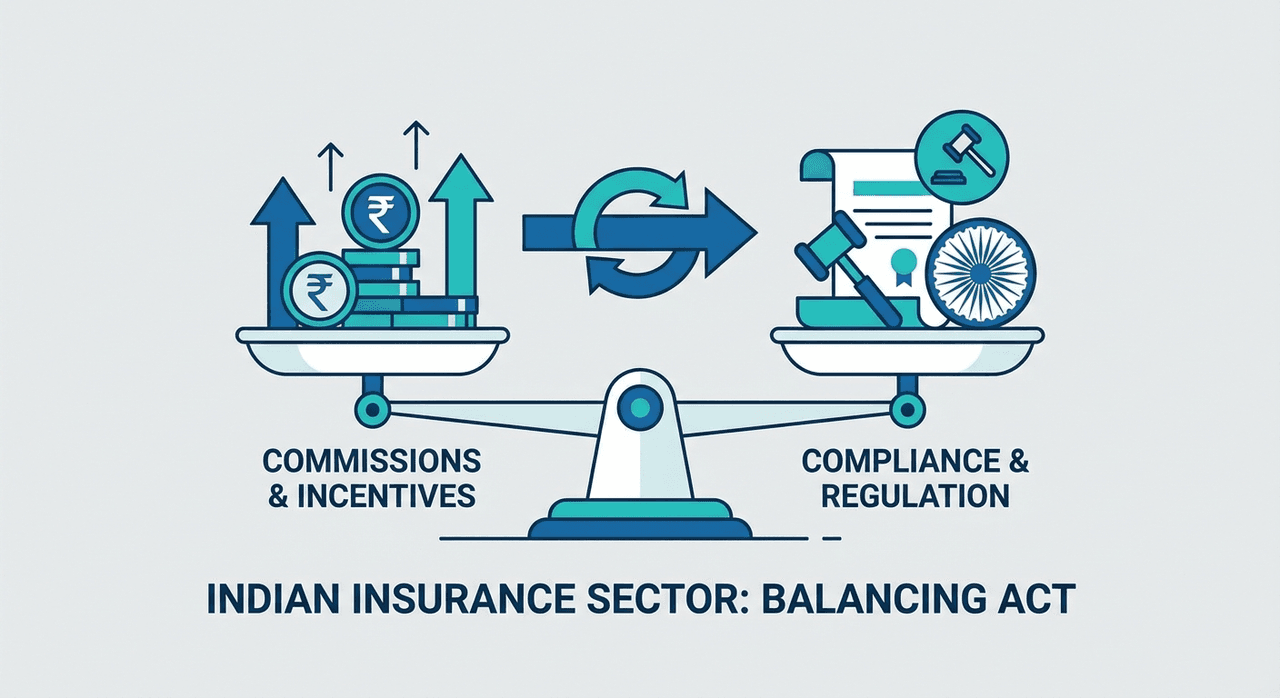
The Insurance Regulatory and Development Authority of India (IRDAI) is preparing for what could be the most significant regulatory intervention in insurance distribution in years. With commission expenses surging and sustainability concerns mounting, the regulator is signaling a fundamental restructuring of how intermediaries get paid.
For brokers, agents, and corporate intermediaries, this is not a distant policy discussion — it's a shift that could reshape the economics of insurance distribution as we know it.
The Numbers Behind the Concern
The scale of commission payouts in the Indian insurance industry has reached a point where the regulator can no longer look the other way.
- Life insurers paid over Rs 60,800 crore in commissions in FY25 — an 18% year-on-year increase
- First-year commissions rose over 20%, while single-premium payouts jumped nearly 37%
- In non-life, commission expenses hit Rs 47,000+ crore, with motor and health accounting for the bulk
Meanwhile, premium growth remains in single digits.
The math is unsustainable. And IRDAI knows it.
What's Coming
Sources indicate that IRDAI may overhaul commission structures by 2026, with new frameworks potentially effective from April 2026. The regulator is examining:
- Tighter commission caps across product categories
- Expense-based limits similar to mutual fund TER (Total Expense Ratio) frameworks
- Product-category ceilings to prevent cross-subsidisation
- Penalties up to Rs 10 crore for violations
Twenty-three insurers — eight life and fifteen non-life — have already been asked to explain expense breaches. This is not a warning shot. It's the beginning of enforcement.
Why This Matters for Intermediaries
For brokers, agents, and corporate intermediaries, this regulatory shift is existential. The old model — front-loaded commissions tied purely to acquisition volume — is being challenged at its core.
The issue is not commissions themselves, but how and when they're paid.
There's growing consensus — within the regulator, among insurers, and across industry bodies — that payouts should be:
- Spread over the policy life, not concentrated at acquisition
- Linked to persistence and service quality, rewarding retention over churn
- Tied to customer experience, not just new business numbers
What This Means in Practice
Intermediaries who rely on high upfront commissions to fund operations will face margin compression. Those who cannot demonstrate ongoing value to policyholders risk being deprioritised by insurers adapting to the new framework.
The days of "sell and move on" are numbered.
The Tech Opportunity
This is where technology becomes critical. The intermediaries who will thrive under the new regime are those who can prove their value beyond the point of sale.
CRMs, automation platforms, and analytics tools can help intermediaries:
- Track customer engagement and policy health — monitor renewals, lapse risks, and service touchpoints in real time
- Demonstrate service value through data — build a track record that insurers and regulators can see and reward
- Build recurring revenue models beyond commissions — advisory fees, service contracts, and value-added offerings
- Improve persistence ratios through proactive outreach — automated reminders, personalised communication, and timely intervention
From Volume to Value
The shift is clear: the market is moving from rewarding acquisition volume to rewarding customer value. Technology is the bridge that makes this transition possible — and profitable.
Intermediaries who invest in digital infrastructure now will have a measurable advantage when the new commission frameworks take effect.
The Path Forward
The IRDAI commission overhaul is not a question of "if" but "when" and "how much." Intermediaries who wait for the final notification to start adapting will find themselves scrambling.
Here's what forward-thinking intermediaries should be doing now:
- Audit your commission dependency — understand what percentage of your revenue is front-loaded and at risk
- Invest in technology — CRMs, analytics, and automation tools that track and demonstrate ongoing customer value
- Build persistence-focused workflows — shift operations from pure acquisition to lifecycle management
- Diversify revenue streams — explore advisory, service-based, and subscription models
- Engage with insurers early — understand how your partners are planning to restructure payouts
The intermediaries who adapt will thrive. Those who don't may find themselves squeezed out by a market that no longer rewards pure acquisition volume.
The time to rethink business models is now.
Experience Vaatun in Action
See how Vaatun's platform can streamline your insurance operations. Book a free demo with our team today.
Book a Free Demo