Why Your Car Insurance Premium Changes From City to City in India — And What It Signals About the Future of Motor Insurance

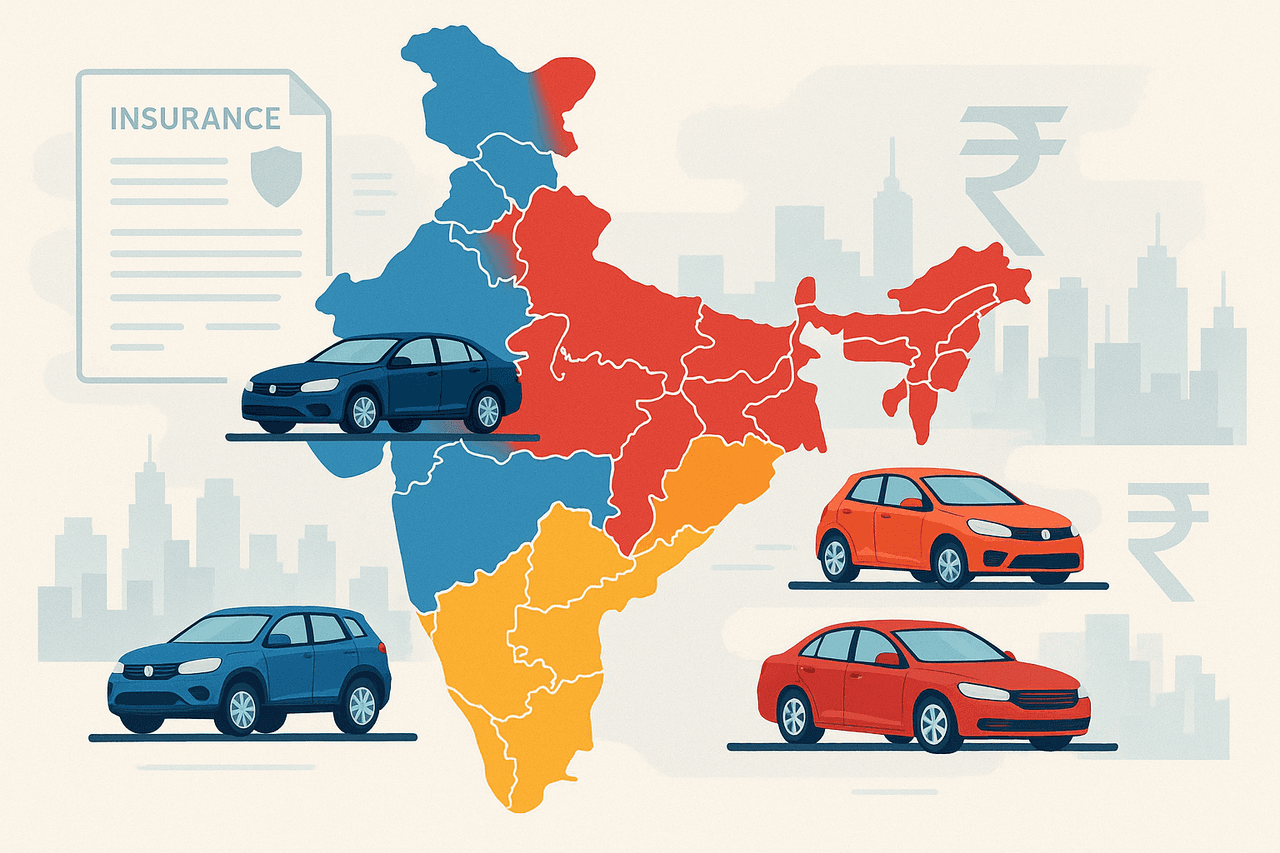
If you’ve ever moved from Lucknow to Mumbai and watched your car insurance premium jump (or vice versa), you’ve seen geography-based pricing in action.
Behind that difference is a mix of regulation, actuarial science, urban risk, and now, a wave of Insurtech innovation that is quietly transforming how Indian motor insurance is priced.
This blog breaks down:
- How and why car premiums differ by region in India
- The IRDAI zone framework (Zone A vs Zone B) and its legacy
- How traditional rating factors (IDV, CC, age) interact with geography
- Emerging trends: telematics, PAYD/PHYD, AI-led pricing, and micro‑segmentation
- What all this means for insurers, intermediaries, and insurance careers
1. The Core Question: Why Does the Same Car Cost More to Insure in One City Than Another?
Imagine two policyholders:
- Same make and model
- Same year of manufacture
- Same insurer, comparable coverage
One is registered in Mumbai, the other in Lucknow. The premium is higher in Mumbai.
This isn’t arbitrary. Insurers are pricing local risk:
- Higher road density and congestion→ more frequent minor collisions and own-damage claims
- Higher theft and vandalism incidence → higher comprehensive losses
- Costlier repairs (labour, parts) in metros → higher average claim size
- Weather and catastrophe profile (e.g., flooding in certain coastal metros)
Insurers don’t need your exact pin code historically; they’ve relied on a zone framework that classifies the region of registration into broad risk buckets.
2. IRDAI’s Zone A and Zone B: The Traditional Geography Backbone
The India Motor Tariff (IMT) 2002, issued under IRDAI oversight, remains the historic basis for many rating parameters in motor business. It splits the country into two primary zones for private cars:
- Zone A – higher-risk, largely metro/ Tier‑1 cities
- Zone B – rest of India, historically treated as relatively lower-risk
2.1. What Is Zone A?
Zone A typically includes:
- Mumbai
- New Delhi
- Kolkata
- Bengaluru
- Chennai
- Hyderabad
- Pune
- Ahmedabad
All other RTO locations fall broadly into Zone B for the purpose of base rating under the old tariff structure.
Callout: Registration Location Matters
For pricing, what matters is where the vehicle is registered, not necessarily where you drive it every day. Shifting RTO registration from a metro to a smaller city, or vice versa, will alter the base premium.
3. How Regional Premiums Are Calculated: IDV, Age, CC, and Zone
Even within the zone framework, insurers need a monetary base for pricing. That’s where IDV (Insured Declared Value) comes in.
3.1. IDV: The Starting Point
IDV is effectively the market value of the vehicle, and for a total loss/constructive total loss, it is the maximum payout.
- Premium → % of IDV
- The % varies by:
- Zone (A vs B)
- Cubic capacity (CC) band
- Age of the vehicle
Under the old IMT tables, for private cars, the own-damage base rate as a % of IDV is marginally higher in Zone A than Zone B for every combination of age and CC bracket.
For example (illustrative, based on IMT 2002 patterns):
- A car under 5 years, <1000cc:
- Zone A: ~3.12% of IDV
- Zone B: ~3.04% of IDV
That gap persists across age and CC slabs, effectively making Zone A 3–10%+ costlier at the base level for own-damage compared with Zone B.
3.2. Engine Size and Age: Why a 1500cc Old Sedan Costs More Than an 800cc New Hatchback (Per ₹ of IDV)
Insurers overlay two fundamental risk insights:
- Engine capacity (CC) is a proxy for:
- Power and speed → accident severity
- Category and segment → cost of parts and labour
- Vehicle age relates to:
- Wear and tear → frequency of breakdowns and minor damages
- Resale value and theft attractiveness
- Availability and cost of spare parts
The IMT 2002 tables therefore step up % rates with:
- Higher CC bands
- Increasing age bands
Layer zone on top, and you get a 3‑dimensional grid: Zone × Age × CC.
4. Beyond the Tariff: Other Rating Factors That Interact With Region
The seeding content rightly highlights other key rating levers that influence premium alongside region:
- Make and Model
- Luxury sedans and premium SUVs carry higher IDVs and higher claim severities.
- Repair networks differ regionally; a luxury car in a smaller city can be even more expensive to fix.
- Type of Coverage
- **Third‑party only: **TP premium is largely tariff-/regulator-driven and not as heavily location‑sensitive for private cars.
- Comprehensive: Own-damage portion is where regional differences show up strongly.
- Add-on Covers
- Zero depreciation, engine protect, consumables, return to invoice, roadside assistance, etc., are often more in demand in cities with higher repair costs and complex driving conditions.
- In high-risk zones, uptake of add-ons can actually grow — ironically increasing the gross premium further, though improving risk protection.
- Safety and Anti‑Theft Features
- Factory-fitted security systems, AIS‑approved anti‑theft devices, and robust immobilisers can attract discounts.
- Some insurers are also piloting discounts for vehicles with advanced driver-assistance systems (ADAS).
- Voluntary Deductibles
- Policyholders willing to share more of the claim cost reduce the insurer’s expected loss, leading to discounts on the own-damage premium.
Importantly, regional risk is not evaluated in isolation; it’s combined with vehicle profile, coverage structure, and behavioural factors.
5. How Insurtech Is Changing Region-Based Pricing
The zone framework is a blunt instrument. Metros are not homogenous, and neither are “rest of India” regions.
Over the last 3–5 years, multiple forces have started to reshape how Indian motor risk is priced:
- Telematics and connected-car data
- Usage-based insurance (PAYD/PHYD)
- Granular, AI-led risk segmentation
- Embedded insurance and digital distribution
5.1. Usage-Based Insurance: PAYD and PHYD
IRDAI’s regulatory sandbox opened space for Pay As You Drive (PAYD) and Pay How You Drive (PHYD) motor products. These link premium more to actual usage and driving behaviour than just static factors like city, age and CC.
- PAYD:
- Premium linked to kilometres driven or usage bands (e.g., 5,000–7,500 km/year).
- Low‑mileage customers in high-premium metros can pay less than “average” assumptions baked into Zone A pricing.
- PHYD:
- Uses telematics to capture driving quality:
- Speeding incidents
- Hard braking and acceleration
- Night driving and high‑risk time windows
- Cornering behaviour
- Rewards safe drivers with lower premiums, even if they live in high-risk areas.
Callout: From “Where You Live” to “How You Drive”
Geography remains important, but Insurtech is shifting part of the rating weight from location to behaviour. This is redefining fairness and segmentation in motor pricing.
5.2. Micro-Segmentation Within Cities
Insurers and MGAs with advanced data teams are no longer satisfied with Zone A vs Zone B:
- Pin code-level risk mapping:
- Density of accidents
- Theft hotspots
- Flood-prone areas
- Garage network analytics:
- Average repair invoice by workshop cluster
- Turnaround time and claim leakage patterns
AI models ingest this data along with historical claim experience to create much tighter risk bands within each city.
In practice:
- Two policyholders in Mumbai may see notably different premiums based on:
- Registration RTO
- Pin code of garaging
- Historical loss experience of that micro‑market
This is where Insurtech carriers and digital brokers are competing—to offer dynamic, personalised, and still-regulator-compliant pricing.
5.3. Connected Cars and OEM Partnerships
Newer vehicles increasingly ship with embedded connectivity:
- OEM apps
- In-vehicle telematics units
- Over-the-air diagnostics
This opens the door to:
- OEM‑insurer tie-ups for:
- Embedded covers at purchase
- Driving-behaviour rewards (loyalty points, service discounts, premium credits)
- Real-time risk monitoring:
- Hard braking patterns
- Average daily commute distance
- Time-of-day usage profiles
As connected vehicles scale, the weight of the “zone” factor may reduce relative to individual driving and utilisation profiles.
6. Market-Level Impact: What the Data Is Saying
Recent market studies and IRDAI statistics show:
- Motor remains one of the largest lines of general insurance in India by premium volume, with steady growth as vehicle ownership rises.
- Urban and metro portfolios show:
- Higher **frequency **of minor own-damage claims
- Higher average claim costs due to labour and parts inflation
- Greater uptake of comprehensive and add-on-rich policies
- Rural and semi-urban segments:
- Lower written premium per vehicle (smaller IDVs, fewer add-ons)
- Growing motorisation and digital adoption, but often lower claim frequency
- Insurers are actively piloting telematics-based and usage-based pricing to:
- Control loss ratios in congested markets
- Attract safe, tech-savvy, urban customers with reward-style products
For actuaries and product teams, regional pricing is now one input among many, not the dominant driver.
7. Strategic Takeaways for Insurance Professionals and Insurtech Builders
For those building a career or products in this space, region-based pricing is no longer just a tariff table—it’s a design problem.
7.1. For Underwriters and Actuaries
- Revisit the weight of geography in rating models:
- Combine legacy zone-based assumptions with actual loss data at micro‑market level.
- Incorporate telematics and usage metrics:
- Move towards multi-factor GLMs/ML models that blend zone, pin code, driver behaviour, and vehicle telemetry.
- Scenario-test climate and infrastructure risks:
- Flooding, heat waves, and urban infrastructure stress vary widely across cities; factor this into catastrophe and attritional pricing.
7.2. For Brokers, Agents, and Digital Distributors
- Educate customers on why region affects premium, especially:
- When they move city or transfer RTO
- When comparing quotes across geographies
- Highlight behaviour-linked savings:
- PAYD/PHYD options for low‑mileage or very safe drivers in Zone A metros.
- Use digital journeys that:
- Capture more granular location information (parking, usual routes)
- Explain add-ons relevant to local risk (e.g., engine protect in flood-prone regions).
7.3. For Insurtech Founders and Product Managers
- Build **risk-scoring engines **that fuse:
- Public data (accident clusters, crime stats, flood maps)
- Telematics data
- Claims and repair analytics
- Partner with:
- OEMs for connected car data
- Digital platforms (rideshare, fleet, leasing) for embedded and contextual motor covers
- Use transparent UX:
- Show customers how driving behaviour and region contribute to pricing, avoiding the perception of arbitrary differentials.
Callout: Regulatory Alignment Is Non‑Negotiable
Any use of geo analytics, telematics, or behavioural data must align with IRDAI rules on filing, pricing freedom, and customer transparency. Commercial innovation has to sit within a tightly supervised framework.
8. For Consumers: How to Use Regional Pricing to Your Advantage
Even if you’re not an insurance professional, understanding region-based pricing helps you buy smarter.
Key practical moves:
1. Check RTO options when relocating
- If you’re moving from a metro to a smaller city and legitimately shifting residence, re‑registration can reduce your premium.
2. Right-size your coverage to local risk
- Flood-prone metro? Prioritise engine protect and return to invoice.
- Theft-prone locality? Consider key & lock replacement and robust anti‑theft devices.
3. Explore PAYD/PHYD products
- If you drive mostly on weekends or short city runs, usage‑linked covers can offset the “Zone A penalty”.
4. Maintain a clean claims record
- Combine a safe driving pattern with a claim-free history to maximise No Claim Bonus (NCB); this stacks with any geography-based rating advantages.
9. The Road Ahead: From Crude Zones to Contextual Risk
The old question- *“Does car insurance premium differ according to regions in India?” - *still has a clear answer: yes, it does, and for valid risk reasons.
What’s changing is how geography fits into the bigger equation:
- From two broad zones to pin code and corridor-level risk scores
- From static city categories to dynamic models that ingest traffic, weather, and behavioural data
- From flat pricing for “Delhi” vs “Lucknow” to highly personalised premiums governed by where you live, how you drive, how much you drive, and even where you park
For insurance professionals and Insurtech innovators, this shift is both a challenge and an opportunity:
- Challenge: Reconciling fairness, explainability, and regulatory compliance with sophisticated pricing.
- Opportunity: Designing customer-centric products that reward safe behaviour, align price with real risk, and make the motor portfolio more sustainable.
As India’s motor insurance market enters a digital inflection point, geography will still matter - but it will increasingly be one voice in a larger chorus of data-driven risk factors, not the loudest voice in the room.
Experience Vaatun in Action
See how Vaatun's platform can streamline your insurance operations. Book a free demo with our team today.
Book a Free Demo